Market Turmoil Amid Geopolitical Tensions: Understanding the Impact
As tensions rise in the Middle East and interest rates climb, the stock market is experiencing significant volatility. This article explores the implications and what investors should consider.
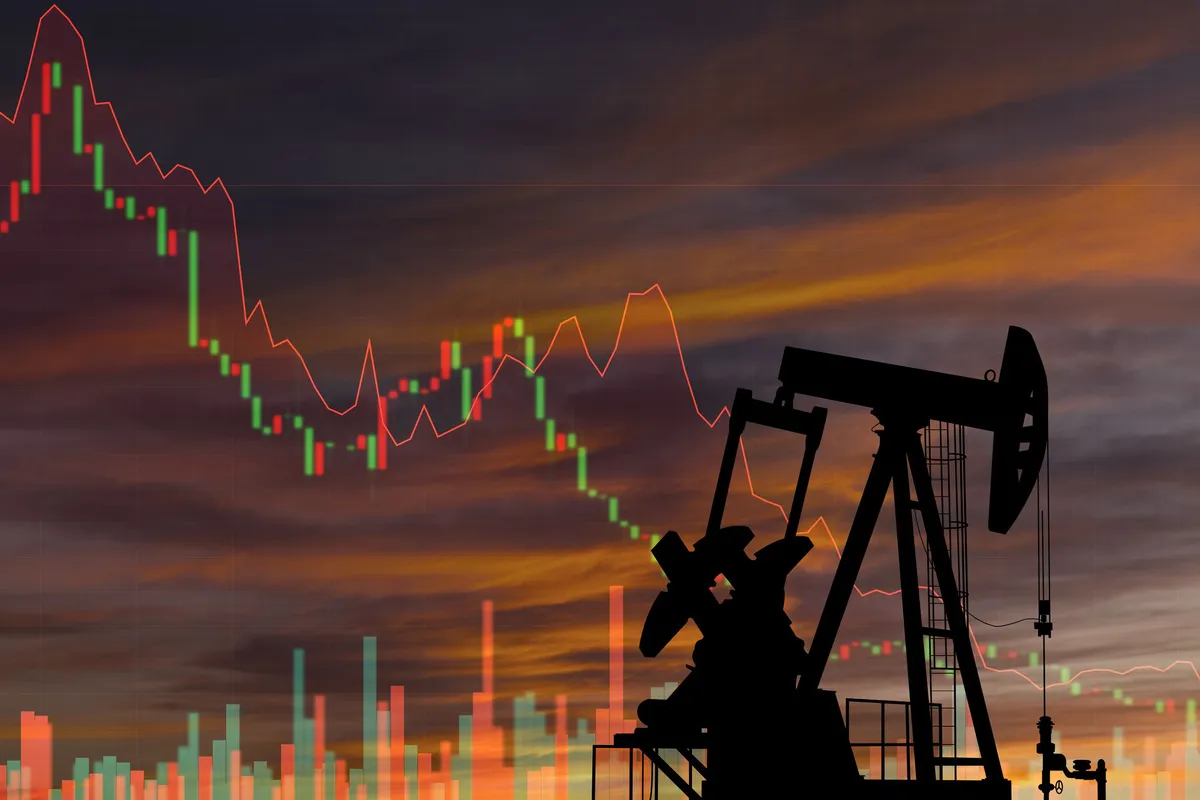
The last trading week of summer has proven to be a challenging period for investors, with major stock indices grappling with significant geopolitical turmoil. The recent escalation of conflict in the Middle East, particularly involving the U.S. and Iran, has not only rattled stock prices but has also contributed to rising interest rates, creating an uncertain environment for investors. As crude oil prices surge and treasury yields hit new highs, understanding these dynamics is essential for anyone looking to navigate this complex financial landscape.
On August 31, 2026, stock markets opened lower across the board, with the Dow Jones Industrial Average, the S&P 500, and the Nasdaq Composite all reflecting the mounting tensions. The backdrop of a U.S. military attack on Iran, coupled with retaliatory strikes against neighboring countries, has intensified fears of further instability in a region critical to global oil supply. This situation has left many wondering how such geopolitical events will influence both short-term trading and long-term investment strategies.
Geopolitical Risks: A Closer Look
Geopolitical risks refer to the potential for political instability or conflict to impact financial markets and economic conditions. The current situation in the Middle East is a pertinent example of how international relations can have immediate consequences for investors. As tensions escalate, markets often react negatively due to uncertainty about future stability and economic growth.
Impact on Crude Oil Prices
The price of crude oil is particularly sensitive to geopolitical events. Following the U.S. attack on Iran, West Texas Intermediate (WTI) crude oil futures surged by 3% to reach $85.92 per barrel. This spike can be attributed to fears of supply disruptions in an already volatile market. For context, oil prices are not just a reflection of geopolitical tensions; they also directly affect inflation rates and consumer spending.
Interest Rates and Treasury Yields
Interest rates are heavily influenced by economic conditions, including geopolitical stability. The yield on the 10-year Treasury note rose to 4.744%, its highest level since January 2025, reflecting investor concerns about inflation and the potential for the Federal Reserve to raise interest rates in response to a tightening labor market. The bond market's reaction can be indicative of investor sentiment regarding economic growth prospects amid geopolitical uncertainty.
The Federal Reserve's Role
The Federal Reserve (the Fed) plays a crucial role in shaping the economic landscape through its monetary policy. Recently, Fed Chair Kevin Warsh reiterated the central bank's commitment to achieving price stability, emphasizing the need for inflation to move towards the 2% target. This commitment becomes increasingly important in light of potential rate hikes, which could be influenced by factors such as labor market performance and inflation data.
Market Expectations for Rate Hikes
The CME FedWatch Tool indicates a 66.1% probability of a 25-basis-point increase to the federal funds rate during the upcoming Federal Open Market Committee meeting. Investors should be aware that unexpectedly strong employment data could lead to increased rate hike expectations, potentially exacerbating market volatility. Higher interest rates typically result in higher borrowing costs, which can dampen consumer spending and business investment.
Stock Market Performance: What to Expect
The performance of major stock indices has been mixed in response to these developments. The Dow Jones Industrial Average closed down 0.7% at 53,185 but managed a monthly gain of 1.3%. The S&P 500 fell by 0.3% but was up 2.6% for August, while the tech-heavy Nasdaq Composite ended the day lower by 0.1% but gained 3.9% over the month. These fluctuations underscore the unpredictable nature of the market in times of geopolitical uncertainty.
The Apple Leadership Transition
In addition to broader market movements, notable corporate developments are also influencing investor sentiment. Apple CEO Tim Cook is set to step down, with John Ternus taking over the role. Under Cook's leadership, Apple saw its stock price grow approximately 2,740% since he took over in 2011, highlighting how strong leadership can impact a company's market performance. The transition comes at a critical time as Apple seeks to innovate in an increasingly competitive landscape, especially in artificial intelligence.

Sector-Specific Reactions
Not all sectors are responding equally to these geopolitical and economic pressures. For instance, utility stocks like Edison International (EIX) and PG&E (PCG) faced significant declines of 22.9% and 20.0%, respectively, due to new wildfire legislation in California that does not provide liability protection for utilities. This legislative change raises concerns about the financial stability of these companies and investor confidence in utility stocks, which are typically viewed as stable investments.
Investor Sentiment in a Volatile Market
In times of volatility, investor sentiment can swing dramatically. Fear of missing out (FOMO) can drive some investors to make impulsive decisions, while others may adopt a more cautious approach. It is essential for investors to remain informed and consider the broader economic and geopolitical context when making financial decisions. Diversification remains a key strategy to mitigate risks associated with market volatility.

Key Takeaways
- Geopolitical tensions in the Middle East are affecting stock markets and oil prices.
- The 10-year Treasury yield has reached a 19-month high, signaling investor concerns.
- The Federal Reserve is likely to consider labor market data when deciding on future interest rate hikes.
- Notable corporate transitions, such as Apple's leadership change, can impact investor confidence.
- Utility stocks are facing challenges due to new wildfire legislation in California.
Frequently Asked Questions
How do geopolitical events impact stock prices?
Geopolitical events can create uncertainty in the market, leading to fluctuations in stock prices. Investors often react to news about conflicts, trade disputes, or political instability by adjusting their portfolios, which can drive prices up or down based on perceived risks. For example, rising tensions in the Middle East can lead to increased oil prices, impacting companies reliant on oil and energy sectors.
What should investors do during market volatility?
During periods of volatility, investors should focus on maintaining a diversified portfolio to spread risk across different asset classes. It's also crucial to stay informed about market trends and economic indicators, such as interest rates and inflation. Instead of making impulsive decisions based on short-term market movements, investors should consider their long-term financial goals and risk tolerance.
How does interest rate movement affect the stock market?
Interest rate movements can significantly influence the stock market. When the Federal Reserve raises interest rates, borrowing costs for consumers and businesses increase, which can lead to reduced spending and investment. This, in turn, may result in lower corporate earnings and negatively affect stock prices. Conversely, lower interest rates can stimulate economic growth by making borrowing cheaper, potentially boosting stock prices.
What sectors are typically more resilient during geopolitical uncertainty?
Typically, sectors such as consumer staples, utilities, and healthcare tend to be more resilient during geopolitical uncertainty. These sectors provide essential goods and services that consumers need regardless of economic conditions. Additionally, defensive stocks in these sectors may offer more stability and attractive dividends, making them appealing to risk-averse investors during turbulent times.
This content is educational and not financial advice.
Comments
Southern Copper Stock: A Consolidation Phase Amid Rising Copper Prices
Southern Copper's stock is currently in a consolidation phase following significant gains and breakout attempts. As copper prices surge, the company's performance shows promising profit growth that investors should consider.

Related articles





Popular in Investing
- Navigating the Dismal Landscape of 2026's Worst-Performing ETFs
- Navigating the Turbulent Waters of Energy Markets: A Deep Dive
- Stablecoin Market Faces $10 Billion Decline — What It Means for Investors
- Cotton Futures Surge Despite Increased Production Forecasts
- Avantus Secures $525 Million for Major California Solar Project