Databricks' Valuation Surge: A Study in AI Startups' Growth Dynamics
Databricks is set to see a 40% valuation increase, but this growth appears modest compared to its AI counterparts like Anthropic. The ongoing influx of capital into the AI sector is reshaping the landscape for startups and investors alike.
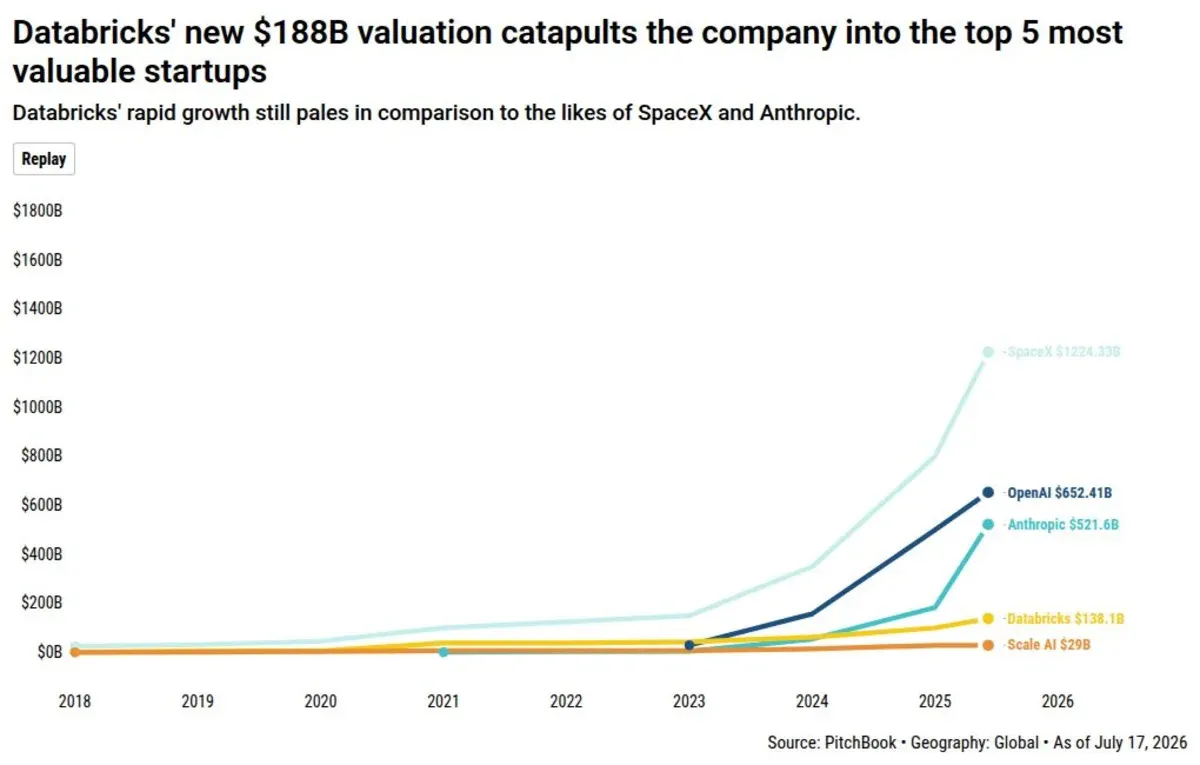
The artificial intelligence (AI) sector continues to captivate investors, with astonishing valuations that have become the hallmark of this burgeoning industry. Databricks, a prominent player in the AI sphere, is set to close a funding round that will boost its valuation by 40% since its last capital raise in February. While this increase is significant, it stands in stark contrast to the meteoric rise of its rival, Anthropic, whose valuation skyrocketed from $380 billion to an extraordinary $965 billion in just one quarter. This dramatic discrepancy raises questions about the dynamics of growth in the AI startup ecosystem and the factors driving such unparalleled investor enthusiasm.
Understanding the Valuation Landscape
At first glance, the impending bump in Databricks' valuation, which will elevate it to approximately $134 billion, seems impressive. However, it pales in comparison to the explosive growth seen by Anthropic and other leading AI startups. According to data from PitchBook, Databricks has raised a total of $29.5 billion to date, but its latest round, spearheaded by Coatue Management, amounts to a more conservative $3 billion—less than half of what it garnered in its previous funding round.

The Role of Institutional Capital in AI
The current landscape for AI startups is characterized by a substantial influx of institutional capital, which is fueling rapid growth and creating a competitive environment where valuations can soar. The top five venture deals in the first quarter of the year accounted for an astounding 77.6% of all new unicorn investments; this demonstrates a marked concentration of investment in a handful of high-potential companies. As Harrison Rolfes, a senior analyst at PitchBook, notes, “Databricks' raise is modest by the standards of the moment.” This statement underscores the idea that the bar for success and growth expectations has been raised significantly in the sector.
Market Dynamics and Growth Strategies
Historically, tech companies reaching a certain scale would see their growth taper off as they matured. However, the AI sector is witnessing a shift in this paradigm. Gaurav Mathur, a general partner at Pinegrove Opportunity Partners and a Databricks investor, emphasizes that we are now in a landscape where scale creates efficiency. This efficiency, in turn, leads to increased market share. In essence, larger companies are leveraging their size not just for stability, but for enhanced operational capabilities and expanded influence in the market.
- Databricks' competitive edge: The company is focusing on advancing its multi-AI governance tool to manage AI costs effectively.
- Workplace AI agents: Enhancements to AI applications designed for workplace productivity are also on the horizon.
- Serverless Postgres database: This innovative database is tailored for AI agents, showcasing Databricks' commitment to pushing the boundaries of AI technology.

The Path to Public Offerings
With the capital raised, Databricks is strategically positioning itself for a potential initial public offering (IPO) on its own terms. The company appears to be building a robust balance sheet, which may provide it with the leverage needed to navigate the public markets successfully. In a climate where valuations are volatile and investor sentiment can shift rapidly, having a strong financial foundation is crucial.
Comparative Analysis: Databricks vs. Anthropic
As AI companies like Anthropic redefine growth trajectories, investors are closely scrutinizing the differences between these two tech giants. While Databricks is taking a more measured approach to growth, Anthropic's aggressive valuation increase highlights the potential risks and rewards of the current investment climate. The stark contrast in their growth rates may also reflect differing business strategies, market positioning, or even the types of products being developed.

Implications for Investors and Stakeholders
The ongoing valuation trends in the AI sector present both opportunities and challenges for investors. Understanding the nuances of each company’s growth strategy is essential for making informed investment decisions. As the market becomes increasingly competitive, stakeholders should remain cognizant of the factors that drive valuations—such as product innovations, market share expansion, and the overall economic environment.
Key Takeaways
- Databricks' new funding round will increase its valuation by 40%, reaching approximately $134 billion.
- Anthropic's valuation has surged from $380 billion to $965 billion, highlighting an aggressive growth trend in AI.
- Institutional capital continues to flow into top AI startups, affecting market dynamics and investor expectations.
- The AI sector is witnessing a shift where larger companies leverage scale for efficiency and market share.
- Databricks is preparing for an IPO, focusing on enhancing its product offerings and financial stability.
Frequently Asked Questions
What factors are driving the high valuations in the AI sector?
The high valuations in the AI sector are driven primarily by substantial institutional capital inflow, rapid technological advancements, and the increasing demand for AI applications across various industries. Investors are keen on funding companies that show promise in innovating and capturing market share, leading to aggressive competition and soaring valuations.
How does Databricks' strategy differ from that of Anthropic?
Databricks is adopting a more cautious approach to growth compared to Anthropic. While Databricks is focusing on solidifying its balance sheet and enhancing its product offerings, Anthropic has pursued a more aggressive growth strategy, resulting in a significant valuation bump. This divergence may reflect different business models, target markets, or corporate philosophies regarding growth and expansion.
What should investors consider when evaluating AI startups?
Investors should consider a multitude of factors when evaluating AI startups, including the company's product offerings, market positioning, financial health, and the competitive landscape. Understanding the specific technology and its potential applications, as well as the management team's experience and vision, can also provide crucial insight into a startup's growth potential and stability.
What does the future hold for Databricks and similar companies in the AI sector?
The future for Databricks and similar companies in the AI sector looks promising but is also fraught with challenges. As competition intensifies and market demands evolve, companies will need to innovate continuously and adapt their strategies. Successful navigation of the IPO landscape and maintaining investor confidence will be critical for long-term sustainability and growth.
This content is educational, not financial advice.
Comments
FuelCell Energy: Potential Upside Amid Market Fluctuations
FuelCell Energy's stock has soared over 250% recently, attracting attention from UBS, which forecasts a $27 price target. As data centers seek reliable energy sources, this could be a pivotal moment for the company.

Related articles







Popular in Investing
- Navigating the Dismal Landscape of 2026's Worst-Performing ETFs
- Navigating the Turbulent Waters of Energy Markets: A Deep Dive
- Stablecoin Market Faces $10 Billion Decline — What It Means for Investors
- Cotton Futures Surge Despite Increased Production Forecasts
- Avantus Secures $525 Million for Major California Solar Project