Navigating Current Challenges in Private Credit Markets
As private credit faces increasing stress, particularly in the software sector, investors must adapt to changing market conditions. This article explores the implications for BDCs and their portfolios.
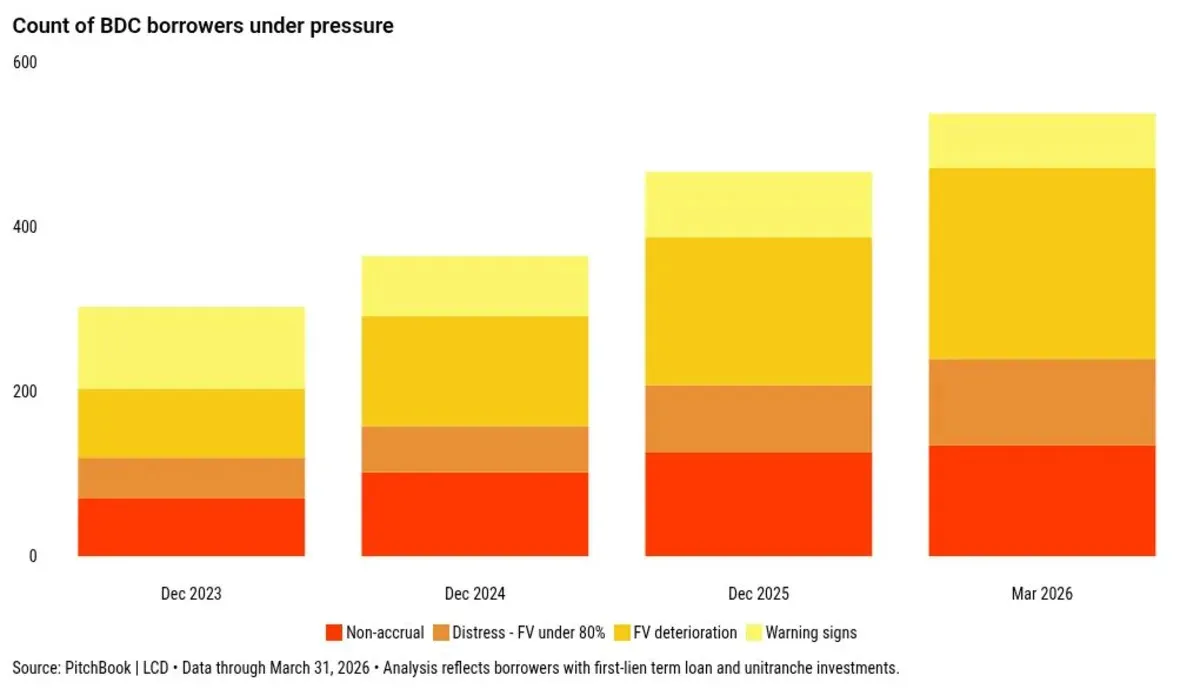
The private credit market is undergoing a significant transformation as it grapples with mounting stresses and evolving dynamics. As companies face increased financial strain, particularly in the software sector, it raises important questions for investors and stakeholders in Business Development Companies (BDCs). With base rates declining, a reliance on payments-in-kind (PIK) income, and an impending maturity wall, the landscape for private credit has become increasingly challenging. For the second consecutive quarter, a negative sentiment regarding the asset class has emerged as the primary concern among market participants, underscoring a critical juncture for BDCs and their investment strategies.
In the first quarter of 2026, data revealed that the number of companies in BDC portfolios manifesting signs of credit pressure surged by 15%, reaching a total of 538 companies. This increase reflects broader economic conditions and sector-specific challenges, with software firms notably comprising a significant portion of distressed assets. This article delves into the current state of private credit, the factors contributing to rising stress levels, and what this means for investors navigating this complex environment.
Understanding the Current Landscape of Private Credit
Private credit has long been viewed as an alternative to traditional lending avenues, offering BDCs the ability to provide financing to companies that may not have access to public markets. However, the current cycle presents unique challenges that are influencing investor sentiment and strategic decision-making.
Declining Base Rates and Economic Pressures
The private credit market is experiencing a decline in base rates, which has historically served as a benchmark for lending rates. Lower rates can initially appear beneficial, as they reduce borrowing costs for companies. However, they also indicate broader economic challenges, including potential slowdowns in growth and profitability. As economic indicators signal uncertainty, the risk appetite among investors has decreased, leading to cautious lending practices.
The Role of Payments-in-Kind (PIK) Income
Payments-in-kind (PIK) income, where interest payments are made in the form of additional debt rather than cash, has become a crucial consideration for BDCs. While PIK can provide short-term relief for borrowers, it can also amplify long-term risks if companies struggle to convert this deferred interest into sustainable cash flow. As of the first quarter of 2026, many distressed borrowers remained solvent, with approximately half of the 538 companies on the watchlist not utilizing PIK in the past year. This suggests a troubling reliance on cash rather than the flexibility of PIK, raising questions about the long-term viability of these companies.

The Software Sector: A Major Player Under Pressure
Among the sectors experiencing the most significant stress, the software industry stands out. As of early 2026, software firms accounted for 26% of investments under pressure, a substantial increase from 19% at the end of 2025. This trend raises concerns not only for BDCs invested in these companies but also for the broader technology market.
Sector-Specific Challenges
The software sector has faced a multitude of challenges, including increased competition, rising operational costs, and the need for continuous innovation. In an environment where customer loyalty is paramount, companies must invest in technology and marketing to retain their client base. However, as economic pressures mount, many firms are finding it difficult to balance these investments with the need to maintain profitability, leading to increased credit stress.
Impact on BDC Investments
For BDCs heavily invested in the software industry, these trends are particularly concerning. The rising number of distressed software companies not only affects the individual firms but can also have a ripple effect on the overall performance of BDC portfolios. As more companies reach critical financial thresholds, investors may need to reevaluate their exposure and consider restructuring or exiting certain positions to mitigate risk.

Assessing the Implications for Investors
Given the current state of the private credit market, investors must approach their strategies with caution. Understanding the underlying factors contributing to credit stress is essential for making informed decisions and minimizing risk.
Strategies for Navigating Credit Stress
In light of rising credit pressure, BDCs may consider several strategies to navigate these challenging conditions:
- Diversification: Investors should assess their exposure to specific sectors, particularly those experiencing significant distress, such as software. Diversifying portfolios across various industries can help mitigate risks associated with concentrated investments.
- Monitoring Cash Flow: Keeping a close eye on cash flow statements and payment practices can provide insights into a company's financial health. BDCs should prioritize investments in companies demonstrating sustainable cash flow over those reliant on PIK.
- Restructuring Options: For companies showing signs of distress, exploring restructuring options may be necessary. This could involve negotiating new terms with lenders or identifying strategic partnerships to stabilize operations.
- Exit Strategies: In cases where distressed investments show little promise for recovery, BDCs may need to consider exit strategies that minimize losses while maintaining overall portfolio health.

Key Takeaways
- Private credit markets are experiencing increasing stress, particularly in the software sector.
- BDCs face challenges from declining base rates and reliance on PIK income.
- Investors should monitor cash flow and consider diversification to mitigate risks.
- Restructuring and exit strategies may be necessary for distressed investments.
- Staying informed about market trends is crucial for making sound investment decisions.
Frequently Asked Questions
What is a Business Development Company (BDC)?
A Business Development Company (BDC) is a type of investment firm that primarily invests in small and medium-sized businesses. BDCs provide capital to these companies in exchange for equity or debt instruments. They are designed to help stimulate economic growth by providing necessary financing to businesses that may struggle to access traditional funding sources.
What does it mean when a company shows signs of credit pressure?
When a company shows signs of credit pressure, it typically means that it is experiencing financial difficulties that may affect its ability to meet debt obligations. This can include declining revenues, increased operational costs, or cash flow issues. For investors, such signs are crucial indicators of risk and may lead to increased scrutiny of the company's financial health.
How can investors protect themselves in a volatile credit market?
Investors can protect themselves in a volatile credit market by diversifying their portfolios, monitoring the financial health of their investments closely, and staying informed about market trends. Additionally, they should consider developing contingency plans that outline potential steps to take in the event of financial distress, including restructuring options or exit strategies.
Why is the software sector particularly stressed right now?
The software sector is facing stress due to a combination of factors, including increased competition, rising operational costs, and the need for continuous innovation. As economic pressures grow, many software companies find it challenging to balance investments in technology and marketing with the necessity of maintaining profitability, which can lead to increased credit stress.
This content is educational, not financial advice.
Comments
Utz Brands Soars 89% Following $2.9 Billion Merger Deal
Utz Brands Inc. saw its stock price skyrocket by 89% after announcing a $2.9 billion merger with Germany's Intersnack Group. This article explores the implications of the deal, investor reactions, and what this means for the future of Utz Brands.

Related articles







Popular in Investing
- Navigating the Dismal Landscape of 2026's Worst-Performing ETFs
- Navigating the Turbulent Waters of Energy Markets: A Deep Dive
- Stablecoin Market Faces $10 Billion Decline — What It Means for Investors
- Cotton Futures Surge Despite Increased Production Forecasts
- Avantus Secures $525 Million for Major California Solar Project