The Venture Capital Landscape: Challenges and Opportunities for New Firms
The venture capital ecosystem is grappling with liquidity challenges that favor established firms over emerging managers. This article explores the implications for startups and investors alike.
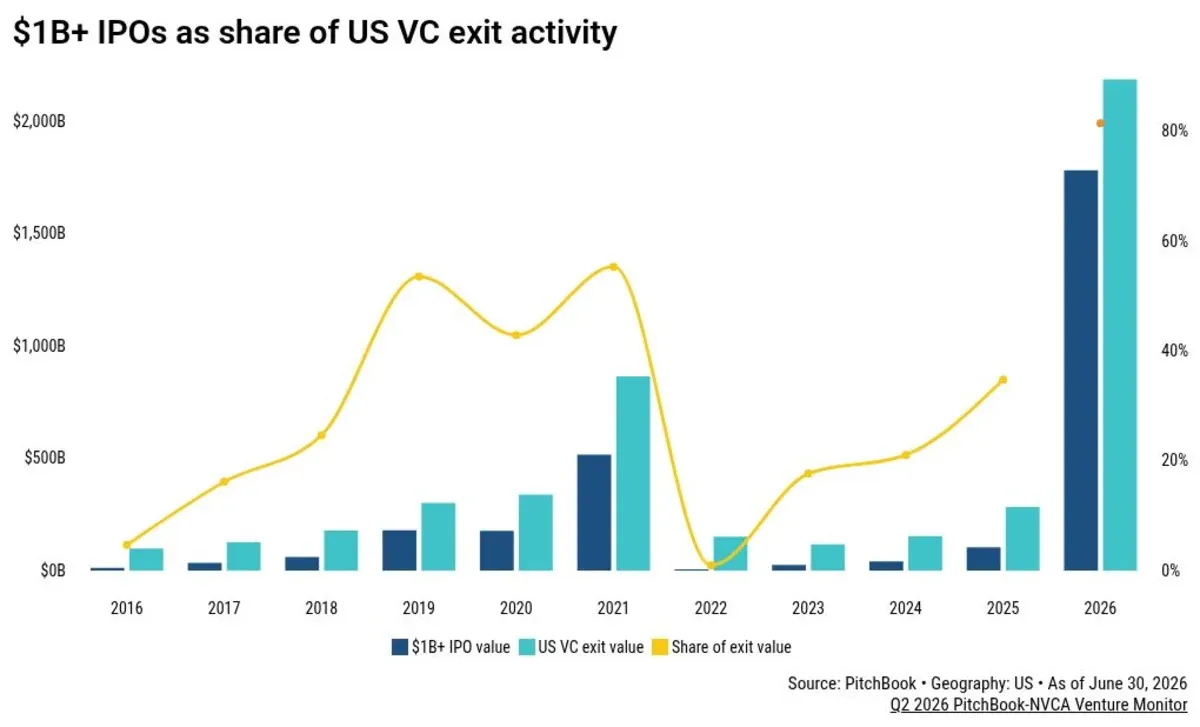
The landscape of venture capital (VC) in the United States has been characterized by a record-breaking first half of 2026, as highlighted in the Q2 PitchBook-NVCA Venture Monitor report. While the total value of venture exits soared to an impressive $2.19 trillion, the persistent liquidity squeeze is reshaping the dynamics of investment in the sector. This phenomenon poses significant challenges for smaller and emerging venture firms, threatening the vitality of a market that relies on innovation and diversity for long-term growth.
As the VC ecosystem evolves, it becomes increasingly critical to understand the implications of these trends—not just for established firms but for the new managers who are essential to nurturing the next generation of startups. With limited partners (LPs) tightening their purse strings and gravitating towards established players, the future landscape of venture capital could look dramatically different.
The Liquidity Crisis: Understanding the Current Climate
Venture capital, like many financial markets, is subject to fluctuations in liquidity, which refers to the ease with which assets can be converted into cash. In a healthy market, LPs—who provide the capital that venture firms manage—benefit from regular distributions, allowing them to reinvest funds into new opportunities. However, the current liquidity crisis has created a scenario where LPs are not receiving the expected returns, forcing them to reassess their investment strategies.
The Role of Limited Partners
LPs, including institutional investors such as pension funds, endowments, and family offices, play a pivotal role in the VC ecosystem. Their capital enables venture firms to invest in early-stage companies, many of which are in the pre-seed or seed stages of development. When LPs do not see funds returned in a timely manner, they become more cautious, leading to a reduction in commitments to new or smaller venture firms.
Challenges for Emerging Managers
Emerging venture managers—those who are newer to the industry or leading smaller funds—are particularly vulnerable in this tightening liquidity environment. Many specialize in early-stage investments that are crucial for startups looking to innovate and grow. However, as LPs become increasingly selective, the ability of these emerging managers to raise capital diminishes. According to Kyle Stanford, PitchBook's director of US VC research, LPs are shifting their focus towards established firms with a proven track record, essentially biasing funding towards those with historical success.
- Record Venture Exits: H1 2026 saw a total VC exit value of $2.19 trillion.
- Concentration of Value: A staggering 81.2% of this exit value came from just 16 IPOs.
- Emerging Managers at Risk: The liquidity crisis is making it harder for newer managers to secure funding.
- Established Firms Dominate: In H1, experienced firms raised 89% of total VC commitments.

Why It Matters: The Impact on Innovation
The implications of this liquidity squeeze extend beyond the immediate financial metrics. If emerging managers struggle to secure capital, the pipeline of innovative ideas and startups may dwindle. These new firms often bring fresh perspectives and alternative approaches to investing, which are vital in a fast-paced technological landscape. As the world moves towards digital transformation and other emerging sectors, the need for diverse investment strategies has never been greater.
The Innovation Pipeline
Emerging managers are often less risk-averse and more willing to invest in unconventional ideas compared to their established counterparts. This willingness to explore uncharted territories can lead to groundbreaking advancements in various sectors, from biotechnology to fintech. If LPs continue to favor established firms, the potential for disruptive innovation could be stifled.
Investment Trends and Strategies Going Forward
In light of these challenges, both LPs and venture firms need to adapt their strategies to thrive in the current environment. For LPs, diversifying their portfolio with a mix of established and emerging managers can help mitigate risks while still capturing potential high returns from innovative startups. Meanwhile, emerging venture firms may need to leverage strategic partnerships or demonstrate unique value propositions to attract capital.
Strategies for LPs
Here are some strategies LPs might consider to navigate the current landscape:
- Diversify Investments: Spread capital across both established and emerging firms to balance risk and opportunity.
- Focus on Track Record: Prioritize funds with demonstrable success in similar sectors to minimize uncertainty.
- Engage with Emerging Managers: Foster relationships with promising emerging managers to gain insights into innovative sectors.

Looking Ahead: The Future of Venture Capital
The venture capital landscape is undoubtedly at a crossroads. While established firms are enjoying a banner year in fundraising, the challenges faced by emerging managers underscore the need for a more balanced approach to capital allocation. As LPs reassess their strategies, the focus must remain on fostering an environment that encourages innovation and supports the next generation of entrepreneurs.
The Importance of a Diverse Ecosystem
Ultimately, a thriving venture capital ecosystem relies on a diverse array of players. By supporting emerging managers, LPs can ensure that the industry remains vibrant and capable of adapting to changing market conditions. The future of venture capital will depend on the ability of both established and new firms to work together, share insights, and cultivate an environment ripe for innovation.

Key Takeaways
- The first half of 2026 saw record VC exit values, but liquidity challenges persist.
- LPs are increasingly favoring established firms over emerging managers.
- Emerging managers are crucial for fostering innovation and diversity in venture capital.
- Strategic partnerships and diversification can help navigate current market challenges.
Frequently Asked Questions
What is causing the current liquidity squeeze in venture capital?
The liquidity squeeze in venture capital is largely due to a lack of distributions to limited partners (LPs). When LPs do not receive expected returns from their investments, they become more selective and cautious about committing new capital, which disproportionately affects smaller and emerging venture firms that rely on ongoing funding to support their investments.
How does the concentration of exit value affect new venture firms?
The high concentration of exit value among a small number of established firms limits opportunities for emerging venture firms. When most of the exit value comes from a handful of successful IPOs, it creates a perception that only established players can deliver returns, making it harder for new managers to attract capital and invest in innovative startups.
What strategies can emerging managers use to secure funding?
Emerging managers can enhance their chances of securing funding by demonstrating their unique value propositions, building relationships with LPs, and showcasing any prior successes or track records. Additionally, leveraging partnerships with established firms can provide credibility and open doors to new investment opportunities.
What is the outlook for venture capital in the coming years?
The outlook for venture capital will largely depend on how LPs adjust their strategies and how emerging managers adapt to the evolving landscape. If LPs continue to support a balanced approach that includes both established and new firms, the ecosystem may thrive. However, if the trend toward prioritizing established managers continues, the potential for innovation could be at risk.
Disclaimer: The content is educational, not financial advice.
Comments
Soybean Market Sees Correction Ahead of USDA Reports
As soybeans experience a downturn ahead of the USDA reports, traders are closely monitoring export sales and market trends. Understanding these shifts is crucial for stakeholders.

Related articles







Popular in Investing
- Navigating the Dismal Landscape of 2026's Worst-Performing ETFs
- Navigating the Turbulent Waters of Energy Markets: A Deep Dive
- Stablecoin Market Faces $10 Billion Decline — What It Means for Investors
- Cotton Futures Surge Despite Increased Production Forecasts
- Avantus Secures $525 Million for Major California Solar Project