Levi Strauss Shares Dip Despite Strong Earnings: What It Means for Investors
Levi Strauss & Co. posted impressive earnings, but its stock fell. Explore the reasons behind this market reaction and what it means for investors.
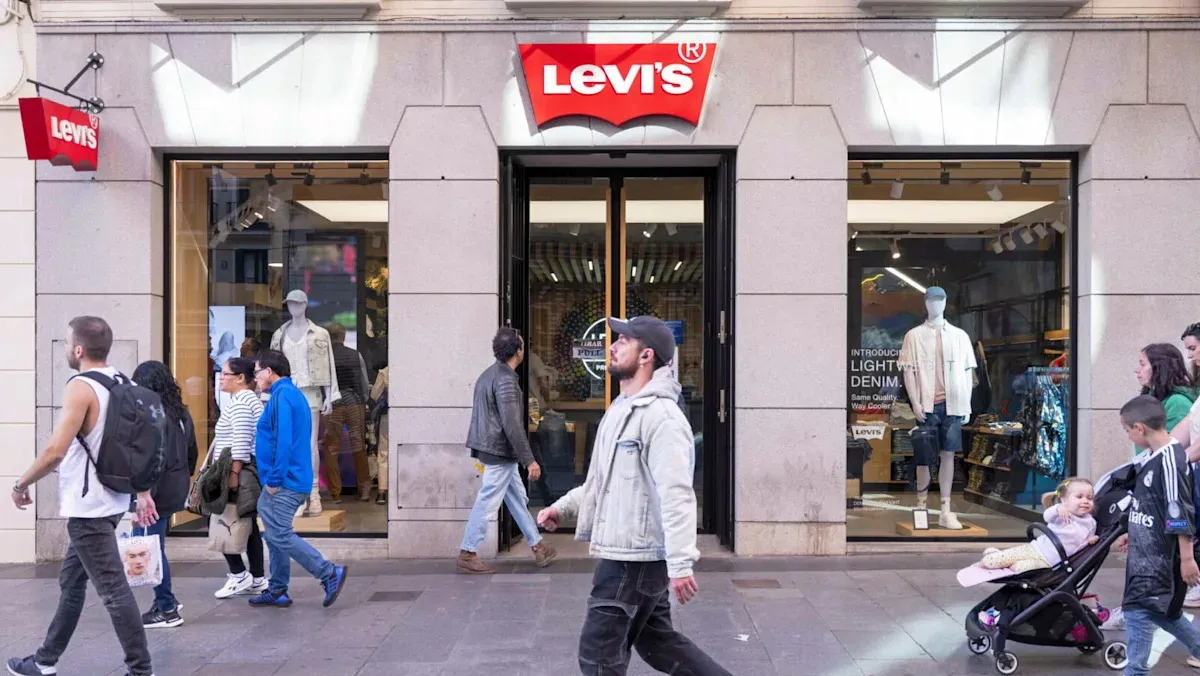
Levi Strauss & Co. has always been a staple in American fashion, known for its iconic denim jeans and rich heritage. Recently, the company reported earnings that exceeded Wall Street expectations, raising eyebrows in both the investment community and the fashion world. Surprisingly, despite this positive financial news, Levi's shares took a hit, falling 5% in after-hours trading. This paradox raises questions about market perceptions and investor expectations, particularly in a time when consumer habits are shifting rapidly.
CEO Michelle Gass has been leading a multi-year turnaround strategy since she took the helm in 2024, focusing on direct-to-consumer (DTC) sales and adjusting the company’s distribution model. While these efforts have shown promise, the mixed market reaction suggests that investors may have been expecting even more from this storied brand.
Understanding Levi's Strong Earnings Report
Levi Strauss recently reported numbers that would typically thrill investors: profits of $87 million, a significant 30% increase compared to the same quarter last year, and revenue for the second quarter of $1.6 billion, reflecting an 8% rise. The company has also enjoyed a steady growth trajectory, with total revenue climbing 3% in Gass's first fiscal year and 4% in 2025. Most notably, DTC sales surged 10.5% in the 2025 fiscal year, and an impressive 11% growth year-over-year in the recent quarter.
This progress has prompted the company to raise its fiscal year sales growth forecast to between 7.0% and 7.5%, up from a previous range of 5.5% to 6.5%. Despite these positive indicators, the earnings per share (EPS) projection of $1.46 to $1.52 fell slightly short of analysts' expectations, which contributed to the drop in stock price. The midpoint forecast of $1.49 was marginally below the anticipated $1.51, leading some investors to reconsider their positions.

Market Expectations vs. Reality
The stock market is a complex ecosystem where investor sentiment often dictates stock performance just as much as financial fundamentals. In this case, Levi’s robust earnings and improved guidance were overshadowed by a modest miss on EPS expectations. This reflects a broader trend where investors are increasingly cautious, expecting companies to not only meet but exceed growth forecasts in an unpredictable economic landscape.
Market analysts suggest that the recent stock reaction is indicative of a heightened sensitivity among investors. Following a prolonged period of economic uncertainty, many are looking for reassurance that companies can deliver sustainable growth. Levi's shift to a more profitable DTC model, while promising, has not yet assuaged all investor concerns.
Strategic Shifts Under CEO Michelle Gass
Since taking over, Gass has initiated significant changes at Levi Strauss to adapt to the evolving retail environment. The focus on a DTC model allows the company to build stronger relationships with consumers while enhancing profit margins. This strategy has involved the closure of its wholly-owned distribution center in Kentucky, resulting in 300 job losses, but aims to streamline operations by utilizing a mix of owned and third-party distribution channels.
These changes are designed to mitigate reliance on traditional wholesalers, a shift that reflects broader trends in retail where direct engagement with consumers is becoming increasingly critical. DTC sales have proven to be a lifeline for many retailers, particularly during the pandemic, and Levi's adaptation to this model has been largely successful.
The Dividend Boost: A Silver Lining?
In a bid to reward shareholders despite the stock's volatility, Levi's also announced a 14% increase in its quarterly dividend, raising it to 16 cents per share. This translates to an annual yield of about 2.6%, which is notably higher than the S&P 500's average yield of approximately 1%. Such a move can be viewed as a positive signal, illustrating the company's commitment to returning value to its investors.
The dividend increase not only reflects confidence in Levi's ongoing profitability but also positions the company favorably within the market, especially for income-focused investors looking for stable returns amidst market fluctuations.

Implications for Investors
For current and prospective investors, the situation surrounding Levi Strauss presents an essential case study in the complexities of market reactions. Even strong earnings can lead to stock declines if investor expectations are not met. As the company navigates its strategic transition, investors must weigh the potential for future growth against the backdrop of current market sentiment.
Investors should consider the following:
- Market Sentiment: Stock reactions can often be influenced more by expectations than actual performance.
- Dividend Stability: The increased dividend may provide a buffer against volatility, appealing to income investors.
- Long-term Strategy: Levi's pivot to DTC sales may position the company for future growth, despite short-term challenges.
In conclusion, while Levi Strauss's recent earnings report highlights the company's operational successes, the mixed market reaction underscores the importance of aligning financial performance with investor expectations. As the company continues to evolve under Gass’s leadership, the focus will likely remain on enhancing shareholder value while adapting to changing consumer preferences.

Key Takeaways
- Levi Strauss reported strong earnings, exceeding Wall Street forecasts.
- Despite positive results, shares fell 5% in after-hours trading due to a slight EPS miss.
- CEO Michelle Gass is steering the company towards a successful DTC model.
- The dividend was increased by 14%, providing a yield above the S&P 500 average.
- Investor expectations can significantly impact stock performance, regardless of actual earnings.
Frequently Asked Questions
Why did Levi's stock drop despite strong earnings?
The decline in Levi's stock price, despite its strong earnings report, can be attributed to a slight miss on the earnings per share (EPS) forecast. Investor expectations are often heightened, and even a marginal shortfall can lead to negative sentiment in the market. The stock market often reacts not just to actual performance but also to perceived potential, causing fluctuations based on analysts' projections.
What is the significance of the dividend increase?
The 14% increase in Levi's quarterly dividend is significant as it demonstrates the company's commitment to returning value to shareholders. A higher dividend yield can attract income-focused investors and indicates management's confidence in the company’s financial health and future profitability. It also signals stability in a volatile market, reassuring investors of their investment's security.
How is Levi's adapting to changing consumer habits?
Levi's is adapting to changing consumer habits by pivoting towards a direct-to-consumer (DTC) sales model. This strategy allows them to foster closer relationships with customers, reduce reliance on traditional retail channels, and improve profit margins. Additionally, the closure of certain distribution centers to streamline operations is part of their broader strategy to enhance efficiency and responsiveness to market demands.
What should investors watch for in Levi's future performance?
Investors should monitor Levi's ability to sustain its growth trajectory, particularly in the DTC segment, as it plays a crucial role in overall profitability. Additionally, observing how well the company manages market expectations and continues to innovate in product offerings will be vital. Changes in consumer preferences, economic conditions, and the competitive landscape within the retail sector will also impact Levi's future performance.
This article is for educational purposes only and should not be considered financial advice.
Comments
Apple's $30B Broadcom Deal: A Game Changer in the Chip Industry
Apple's recent $30 billion chip supply agreement with Broadcom positions it closer to overtaking Nvidia in market capitalization. This move marks a significant shift in the semiconductor landscape, underscoring Apple's commitment to reshoring manufacturing and enhancing its AI capabilities.

Related articles







Popular in Investing
- Navigating the Dismal Landscape of 2026's Worst-Performing ETFs
- Navigating the Turbulent Waters of Energy Markets: A Deep Dive
- Stablecoin Market Faces $10 Billion Decline — What It Means for Investors
- Cotton Futures Surge Despite Increased Production Forecasts
- Avantus Secures $525 Million for Major California Solar Project