Is Now the Time to Buy Nvidia Stock? An In-Depth Analysis
Nvidia stock has recently experienced a pullback, but historical trends suggest a potential rebound. Here’s what investors should know about buying the dip.
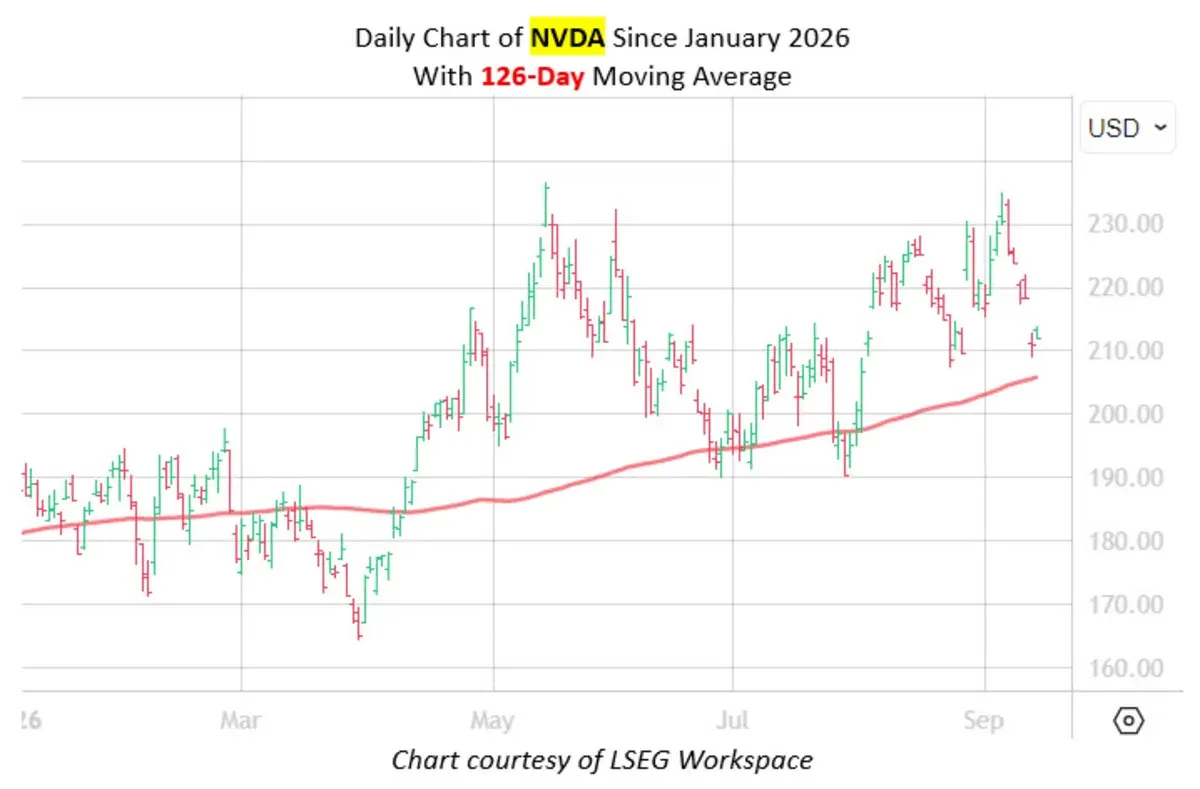
In the dynamic world of stock trading, the phrase 'buy the dip' often resonates with investors looking for the right moment to enter the market. Recently, Nvidia Corp (NASDAQ: NVDA) experienced a notable pullback, sparking discussions about whether now is the ideal time to invest in this tech giant. After five consecutive days of losses, including a sharp decline of 3.4% attributed to the volatility surrounding artificial intelligence (AI) stocks, NVDA is showing signs of recovery, inching up to $211.72. This raises an important question: Is this a temporary lull, or is a significant rebound on the horizon?
As of now, Nvidia's stock is up 13.3% in 2026, signaling that while the recent downturn has been challenging, the overall trajectory remains positive. Historical data may offer some insights, suggesting that a rebound could be imminent. Schaeffer's Senior Quantitative Analyst, Rocky White, has noted a historically bullish trendline for NVDA, which could indicate that patient investors may soon be rewarded.
Understanding the Current Market Conditions
The tech sector, particularly companies involved in AI and semiconductors like Nvidia, has been subject to considerable market fluctuations. The recent decline in Nvidia's stock can be linked to broader market reactions to AI advancements and innovations, which are often met with both excitement and skepticism. As investors digest these developments, stock prices may swing dramatically in response to news cycles.
Key Market Indicators
Several indicators suggest that Nvidia may be poised for a rebound:
- Moving Averages: Currently, Nvidia is trading at 0.75 times its 126-day moving average's 20-day average true range (ATR). This is a significant metric, as it indicates that the stock has spent a considerable amount of time above this trendline.
- Historical Performance: Over the past decade, similar setups have occurred 11 times, and in 82% of those instances, the stock was higher one month later, averaging a gain of 6.2%.
- Market Sentiment: Currently, the stock's put/call volume ratio stands at a level higher than 83% of readings from the past year, indicating a bearish sentiment that may soon reverse.
What the Analysts Are Saying
Experts like Rocky White emphasize the potential for recovery in Nvidia's stock based on historical trends and current technical indicators. When a stock experiences a pullback but shows signs of strength, as indicated by its performance in relation to moving averages, it can be a compelling buying opportunity.
Moreover, the Schaeffer's Volatility Index (SVI) currently stands at 34%, which is higher than just 2% of readings from the past year. This suggests that options traders expect low volatility in the near term, making options trading more affordable and potentially lucrative for investors willing to take on calculated risks.
The Role of Options Trading
Options trading can be a powerful tool for investors looking to capitalize on stock movements without committing to purchasing the stock outright. In the case of Nvidia, the current low volatility expectations could present an opportunity for investors to buy call options at a lower premium.
Understanding Call Options
Call options give investors the right, but not the obligation, to purchase stock at a predetermined price within a specific timeframe. If Nvidia's stock rebounds, those who purchased call options could see substantial returns. Here's how it works in practice:
- Example Scenario: Suppose an investor buys a call option for Nvidia with a strike price of $220, expiring in one month. If the stock rises to $225, the investor can exercise the option, purchasing shares at $220 and realizing a profit.
- Risk Management: If the stock does not rise above the strike price, the investor's loss is limited to the premium paid for the option.
Potential Risks and Considerations
While buying the dip can potentially yield profits, it is not without risks. Investors should consider several factors before making a move:
- Market Volatility: The tech sector, particularly AI-related stocks, can be highly volatile. Prices can swing dramatically based on news and investor sentiment.
- Company Fundamentals: Beyond technical indicators, it's essential to consider Nvidia's overall business performance, including earnings reports, product launches, and market share.
- Investment Horizon: Investors should assess their time frame for holding the stock or options. Short-term traders may react differently to market fluctuations than long-term investors.
Key Takeaways
- Nvidia's stock has experienced a pullback but shows signs of potential recovery based on historical trends.
- Technical indicators such as moving averages and put/call ratios suggest a bullish outlook.
- Options trading may offer a strategic way to benefit from potential stock price increases.
- Investors should remain cautious and consider both market conditions and company fundamentals before making investment decisions.

Frequently Asked Questions
What does it mean to 'buy the dip' in stock trading?
'Buying the dip' refers to the strategy of purchasing stocks after they have experienced a decline in price, with the belief that they will rebound. This strategy is often employed during periods of market volatility, and investors hope to acquire shares at a lower price before the stock's value increases again.
How can I assess whether Nvidia is a good investment?
To determine if Nvidia is a good investment, consider analyzing the company's fundamentals, including revenue growth, profit margins, and market share in the tech industry. Additionally, review technical indicators such as moving averages and volume trends, and stay updated on industry news that could impact Nvidia's performance.
What are the risks associated with options trading?
Options trading carries several risks, including the potential for complete loss of the premium paid for the option if the stock does not perform as expected. Additionally, options can expire worthless, and investors must be aware of the time constraints associated with options contracts.
Should I invest in Nvidia stock now?
Investing in Nvidia or any stock should be based on individual financial goals and risk tolerance. It's crucial to conduct thorough research, analyze market conditions, and consider consulting with a financial advisor to make informed decisions that align with your investment strategy.
This content is educational and not financial advice.
Comments
NuScale Power: Navigating Challenges in the Small Modular Reactor Market
NuScale Power faces a challenging landscape after UBS downgraded its stock, raising questions about its future in the small modular reactor industry. This article explores the implications of this downgrade and what it means for investors.

Related articles






Popular in Investing
- Navigating the Dismal Landscape of 2026's Worst-Performing ETFs
- Navigating the Turbulent Waters of Energy Markets: A Deep Dive
- Stablecoin Market Faces $10 Billion Decline — What It Means for Investors
- Cotton Futures Surge Despite Increased Production Forecasts
- Avantus Secures $525 Million for Major California Solar Project