Trustpilot's Mixed Quarter: Understanding the Investor Backlash
Despite strong growth metrics, Trustpilot's recent earnings report has left investors reeling due to unexpected losses and unchanged guidance. This article explores the implications for shareholders and the company's future outlook.
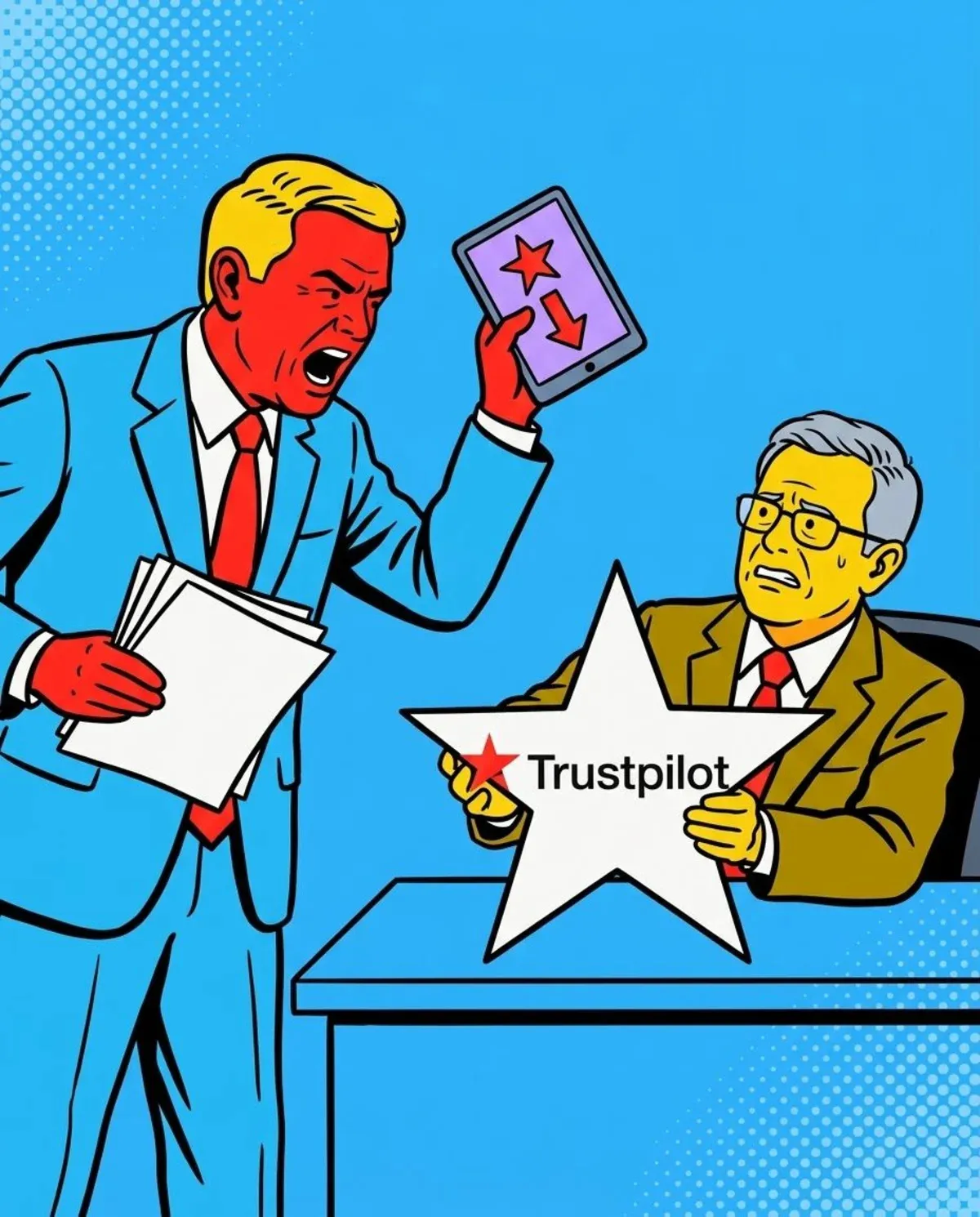
Trustpilot, the online review platform known for its role in shaping consumer perceptions, recently faced significant investor backlash following its latest earnings report. While the company reported robust growth metrics with revenue increasing by 23% and bookings rising by 22%, it was a surprise statutory loss that caused shares to plummet by as much as 20%. This reaction highlights the delicate balance between perceived growth potential and actual financial performance in today's market.
The earnings report, which showcased a record adjusted EBITDA growth of 46%, contrasted sharply with a net loss of approximately $1.1 million. This discrepancy raised questions about the company's financial health and future guidance, leading to a critical reassessment among investors who had previously driven the stock up by around 60%. In this article, we will delve into the details of Trustpilot's financial results, the implications for its stock, and what this means for current and prospective investors.

Trustpilot's Financial Highlights
In the first half of the year, Trustpilot reported revenue of $151.4 million, a figure that reflects a 19% growth rate when adjusted for constant currencies. Bookings also saw a healthy increase, climbing to $171.2 million. Despite such impressive growth rates, the company faced challenges on the profitability front.
Key Financial Metrics
- Revenue: $151.4 million (up 23%)
- Bookings: $171.2 million (up 22%)
- Adjusted EBITDA: $26.3 million (up 46%)
- Net Loss: $1.1 million
- EBITDA Margin: 17.4%
The substantial growth in adjusted EBITDA indicates that Trustpilot has been effective in managing its operational costs relative to its income. Nonetheless, the reported statutory loss was exacerbated by several one-off charges, including a €4 million fine imposed by Italy's competition authority and a provision of around $1 million for historical sales taxes in various U.S. states. These charges not only impacted immediate profitability but also added a layer of complexity to the company's financial narrative.

Understanding Investor Sentiment
The sharp decline in Trustpilot's share price following the earnings report can be understood through the lens of investor sentiment, which has become increasingly sensitive to any signs of financial instability. Investors had anticipated a clean financial report with no regulatory or accounting surprises, particularly after a significant run-up in stock price fueled by optimism surrounding the company's potential in AI and large enterprise contracts.
Despite the company's assurances that the fine and tax provision do not reflect its underlying operational performance, the market reacted strongly. This reaction underscores a growing trend where investors are not just looking for growth but also for clarity and stability in financial reporting. Trustpilot's failure to upgrade its full-year guidance, despite strong growth in the first half, further fueled concerns.

Regulatory Challenges and Their Impact
The regulatory challenges facing Trustpilot, particularly the fine from Italy, have raised questions about the company's compliance and operational practices. The fine relates to regulatory findings that Trustpilot is currently appealing, adding uncertainty to the company's financial outlook. For a platform built around the concept of trust, any regulatory scrutiny can have far-reaching implications, not only in terms of financial penalties but also in terms of consumer perception.
Furthermore, the historical sales tax issue in the U.S. could indicate potential gaps in the company's compliance mechanisms, which has likely contributed to investor anxiety. While Trustpilot maintains that these issues will not affect its core operations, the market appears unconvinced, leading to a reevaluation of the company's risk profile.
The AI Opportunity: Promise vs. Expectations
One of Trustpilot's key growth narratives has been its potential role in the expanding landscape of artificial intelligence. As consumers increasingly rely on AI-driven tools for making purchasing decisions, Trustpilot's database of independent reviews positions it uniquely within this space. The company argues that its scale provides a competitive advantage, allowing its content to feature prominently in AI-generated search results.
However, the challenge is that much of this potential is already priced into the stock. Investors are now demanding more than just confirmation of existing growth; they expect the company to back its growth narrative with tangible upgrades and less operational noise. Trustpilot must navigate this fine line as it seeks to capitalize on its AI capabilities while managing investor expectations around financial performance.

Looking Ahead: What’s Next for Trustpilot?
The future of Trustpilot hinges on several critical factors. Firstly, management's unchanged guidance for 2026 raises questions about whether this is a conservative stance or a reflection of underlying concerns. If Trustpilot can continue to demonstrate strong bookings and growth in the U.S. market, there may be room for upward revisions later in the year.
Investors will also be keen to see whether the company can effectively manage the fallout from the sales tax issue and whether its appeal against the Italian fine yields any financial repercussions. The long-term potential of AI remains an attractive narrative, but it is contingent on Trustpilot's ability to deliver growth with fewer complications.
Key Takeaways
- Trustpilot reported strong growth in revenue and adjusted EBITDA but faced a statutory loss.
- Regulatory fines and tax provisions introduced uncertainty, impacting investor sentiment.
- The company's unchanged guidance for 2026 raises questions about future growth prospects.
- Trustpilot's potential in AI remains promising but requires clear and stable financial reporting.
Frequently Asked Questions
What caused Trustpilot's stock to drop significantly?
Trustpilot's stock dropped significantly due to a combination of strong revenue growth overshadowed by a surprise statutory loss of $1.1 million. Additionally, one-off charges, including regulatory fines, raised concerns among investors about the company's financial stability and compliance practices. The market's reaction reflects heightened sensitivity to perceived risks in financial reporting, especially after an impressive run-up in share prices.
How does Trustpilot's subscription model impact its revenue stability?
Trustpilot's subscription model provides visibility into its revenue streams as signed contracts typically drive consistent income over their duration. This model allows the company to forecast its income more reliably, which is crucial for maintaining investor confidence. However, any disruptions or penalties can still affect its overall financial health, as seen in the recent earnings report.
What is the significance of the regulatory fine imposed on Trustpilot?
The regulatory fine imposed by Italy's competition authority is significant because it raises questions about Trustpilot's compliance with local regulations. Such fines can not only impact immediate profitability but also affect consumer trust in the platform, which is crucial for a business built around providing reliable reviews. Trustpilot is currently appealing this fine, and the outcome could further influence investor perceptions and stock performance.
What should investors consider when evaluating Trustpilot's future?
Investors should consider Trustpilot's growth trajectory in relation to its regulatory challenges and financial reporting transparency. The company's potential in leveraging AI for growth is promising, but it must also address the uncertainties introduced by recent fines and tax provisions. Monitoring management's guidance, future financial results, and the resolution of regulatory issues will be key in assessing Trustpilot's investment potential.
Disclaimer: The content is educational, not financial advice.
Comments
NuScale Power: Navigating Challenges in the Small Modular Reactor Market
NuScale Power faces a challenging landscape after UBS downgraded its stock, raising questions about its future in the small modular reactor industry. This article explores the implications of this downgrade and what it means for investors.

Related articles





Popular in Investing
- Navigating the Dismal Landscape of 2026's Worst-Performing ETFs
- Navigating the Turbulent Waters of Energy Markets: A Deep Dive
- Stablecoin Market Faces $10 Billion Decline — What It Means for Investors
- Cotton Futures Surge Despite Increased Production Forecasts
- Avantus Secures $525 Million for Major California Solar Project