Navigating the SPCX Stock Landscape After the AI Safety Controversy
SpaceX's public debut on the Nasdaq was overshadowed by an 'F' rating in AI safety. Here's what investors need to know about SPCX stock and its future.
SpaceX, officially known as Space Exploration Technologies (SPCX), has become a household name in the aerospace industry since its inception in 2002. Founded by Elon Musk and headquartered in Starbase, Texas, the company is known for its ambitious projects ranging from reusable rockets to satellite internet services. However, its recent foray into artificial intelligence (AI) has drawn scrutiny, particularly after receiving a poor safety rating. As SPCX stock continues to fluctuate, investors are left wondering how to navigate this turbulent landscape.
On June 12, 2026, SpaceX made its debut on the Nasdaq, marking the largest IPO in history with a valuation of $1.77 trillion. Initial excitement saw shares priced at $135, closing their first day at $161—an impressive 19% gain. Yet, just days later, SPCX peaked at $225.64 before experiencing significant volatility, ultimately trading around $149 as of July 7, 2026. This decline has raised questions about the sustainability of its valuation amidst a backdrop of regulatory scrutiny and operational challenges in its expanding AI segment.
A Closer Look at SpaceX's Business Segments
SpaceX operates across three primary segments: Space, Connectivity, and AI. Each of these areas contributes differently to the company's overall performance and investment appeal.
Space Segment
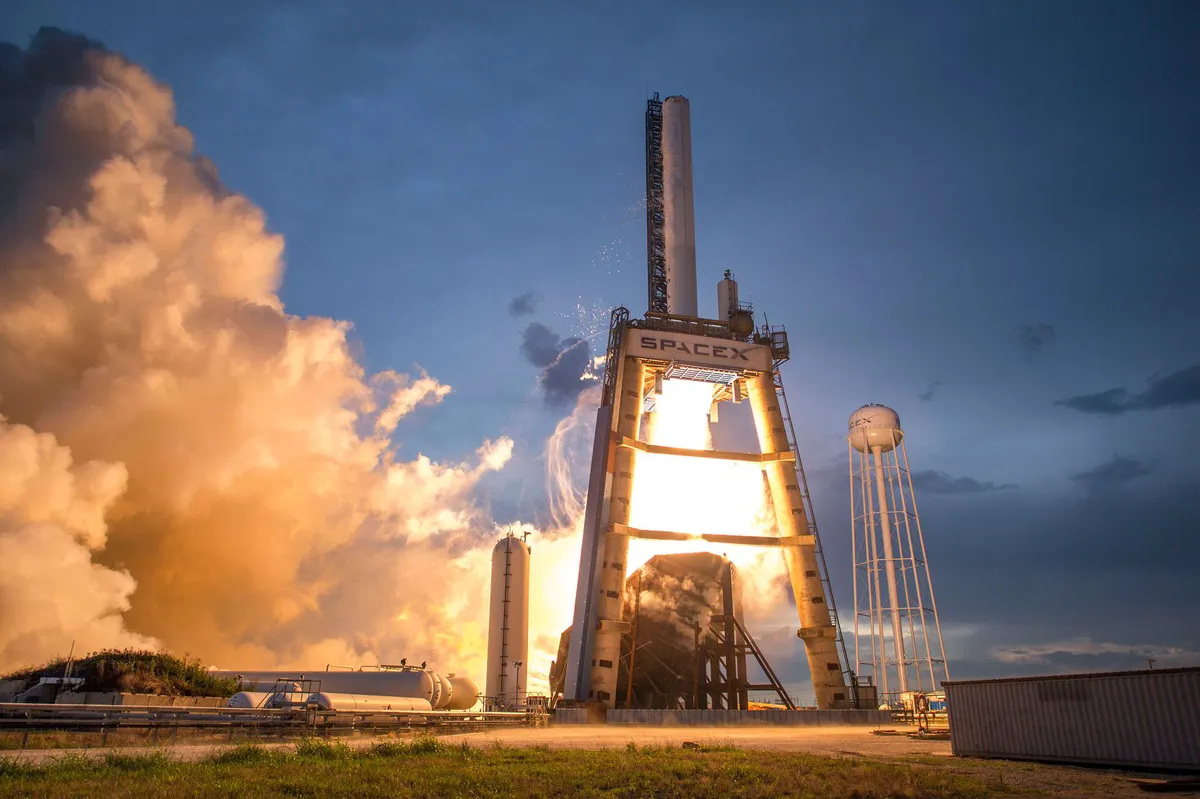
The Space segment is perhaps the most recognized facet of SpaceX, responsible for designing and launching rockets such as the Falcon 9 and the Falcon Heavy. This segment has been instrumental in achieving milestones such as successful satellite deployments and missions to the International Space Station (ISS). It is expected that the upcoming 13th test flight of the Starship, slated for late July 2026, will play a crucial role in expanding SpaceX's capabilities.
Connectivity Segment
SpaceX's Connectivity segment is anchored by its Starlink satellite broadband network, which has gained over 10.3 million subscribers in 164 countries. The segment generated $3.257 billion in revenue in Q1 2026 and has been the only profitable business unit within SpaceX, delivering $1.188 billion in operating income. This profitability is vital for offsetting losses from other segments, especially in light of the company's ambitious plans to expand Starlink Mobile.
AI Segment
The AI segment, which encompasses the Grok large language model and the newly acquired xAI division, has faced significant challenges. In its most recent financial reports, the AI segment posted revenue of $818 million but suffered an operating loss of $2.469 billion. The burgeoning costs associated with scaling AI infrastructure present a stark contrast to the profitability seen in the Connectivity segment.

Stock Performance and Market Sentiment
The stock market has reacted to SPCX's mixed performance. Following its Nasdaq debut, SPCX joined the Nasdaq-100 on July 7, 2026, which brought an influx of $4.3 billion from index trackers. However, despite a broader market rally fueled by enthusiasm for AI infrastructure, SPCX's stock has underperformed, grappling with valuation concerns and a thin public float of just 5%. This has resulted in heightened volatility, making it difficult for investors to gauge the stock's true value.
Furthermore, the recent AI Safety Index published by the Future of Life Institute delivered a significant blow to SpaceX's reputation, with its AI division receiving an 'F' grade. This ranking places SpaceXAI among the lowest in a field of prominent AI companies, raising questions about the company’s governance and risk management strategies. Investors have expressed concern that this poor performance could hinder SpaceX's credibility with institutional investors, complicating its investment thesis.
Financial Overview and Future Outlook
In its Q1 2026 earnings report, SpaceX disclosed a consolidated revenue of $4.694 billion but faced an operating loss of $1.943 billion, widening to a net loss of $4.28 billion. The company is currently grappling with an accumulated deficit of $41.3 billion, highlighting the financial strain as it invests heavily in its future growth initiatives. At the end of Q1 2026, SpaceX held $15.9 billion in cash against $29.1 billion in long-term debt, a precarious balance sheet that raises additional concerns for investors.
Looking ahead, SpaceX has set ambitious revenue targets, aiming for $1 trillion by 2030. The company is banking on several growth strategies, including:
- Expanding Starlink Mobile services
- Monetizing its consumer AI platform
- Deploying orbital AI compute satellites
These strategies are expected to bolster revenue, but investors should be cautious, as the projected deployment of AI satellites is not expected until at least 2028.

Investment Considerations
Given the current landscape, should investors consider buying SPCX stock? Despite the recent setbacks, Wall Street analysts remain cautiously optimistic, offering a consensus rating of 'Strong Buy' across 29 ratings, with a mean price target of $202.38. This implies a potential upside of about 35% from the current levels, indicating that analysts see long-term value in the company’s profitability from Starlink and its ambitious AI projects.
However, the AI Safety Index's 'F' rating introduces a layer of governance risk that potential investors must weigh against the optimistic growth projections. The combination of deep AI losses, a high valuation, and regulatory scrutiny complicates the investment thesis, inviting a careful analysis of both the risks and rewards.
Key Takeaways
- SPCX stock has experienced significant volatility since its IPO, with a 34% pullback from its high.
- The AI segment is underperforming, contributing to significant financial losses.
- Despite challenges, analysts maintain a 'Strong Buy' consensus with a price target suggesting substantial upside.
- The company's ambitious growth plans could drive future revenue, but execution remains critical.
Frequently Asked Questions
What factors contributed to SpaceX's stock volatility?
The volatility surrounding SPCX stock can be attributed to several factors, including valuation concerns, a thin public float of only 5%, and investor unease regarding the company's deepening losses in the AI segment. The recent 'F' rating in the AI Safety Index has further compounded these concerns, leading to increased scrutiny from both analysts and investors.
How does the AI Safety Index impact SpaceX's investment outlook?
The 'F' rating on the AI Safety Index significantly impacts SpaceX's investment outlook by introducing governance risks. Investors are increasingly cautious about the company's ability to manage its AI ambitions effectively, particularly in the context of heavy losses in that segment. This rating raises questions about the robustness of the company's risk management strategies and may deter institutional investors.
What are SpaceX's future growth strategies?
SpaceX is pursuing several ambitious strategies aimed at driving future growth, including expanding its Starlink Mobile services, monetizing its consumer AI platform, and deploying orbital AI compute satellites. While these growth initiatives are promising, their successful execution will be critical for achieving the company's long-term revenue targets of $1 trillion by 2030.
Comments
Levi Strauss Shares Dip Despite Strong Earnings: What It Means for Investors
Levi Strauss & Co. posted impressive earnings, but its stock fell. Explore the reasons behind this market reaction and what it means for investors.

Related articles




Popular in Investing
- Navigating the Dismal Landscape of 2026's Worst-Performing ETFs
- Navigating the Turbulent Waters of Energy Markets: A Deep Dive
- Stablecoin Market Faces $10 Billion Decline — What It Means for Investors
- Cotton Futures Surge Despite Increased Production Forecasts
- Avantus Secures $525 Million for Major California Solar Project